
With over 450 million monthly users searching for inspiration, Pinterest offers a unique opportunity for affiliates.
Pinterest affiliate marketing combines the visual appeal of Pinterest with the earning potential of affiliate programs.
Unlike other social platforms, pins have longevity, continuing to drive traffic months or even years after posting.
If you’re ready to transform your Pinterest hobby into a passive income stream, this post will show you how to get started.
Disclaimer: If you buy any products through links on this site, I may earn a commission. But it doesn't make any difference to your cost, and it helps me keep this blog running. So you could always read my articles for free.
What is Pinterest, and how does it work?
Pinterest is a visual discovery platform where people find ideas for things they are interested in. Think of it as a digital bulletin board where you can collect and organize images, videos, and links from around the internet.

When you sign up for Pinterest, you create a profile and can start making “boards” – collections organized by topic like “kitchen renovation,” “summer outfits,” or “healthy recipes.”
You save content to these boards in the form of “pins,” which are images or videos that link back to websites.
Before you start Pinterest affiliate marketing, you need to know how the platform works:
- Create an account using your email or Google or Facebook.
- Browse the home feed, which shows pins based on your interests and activity.
- When you find something you like, save it to one of your boards.
- Follow other Pinterest users to see their pins in your feed.
- Create your own pins by uploading images or videos and adding descriptions and links.
The Pinterest algorithm learns what you like based on your activity and shows you more relevant content over time.
If you are planning to make money with Pinterest, here’s some good news for you:
Unlike most social media, Pinterest content has a long lifespan – pins can continue getting views and clicks months or even years after posting.
Businesses and content creators use Pinterest to drive traffic to their websites, showcase products, or share their ideas with a wider audience.
Why use Pinterest for affiliate marketing?
Pinterest offers unique advantages for affiliate marketing that other platforms simply don’t match. It’s a goldmine for affiliate marketers looking to connect with motivated buyers. Here’s why:
Long content lifespan
Unlike Facebook or Instagram where posts disappear from feeds within hours, Pinterest pins can drive traffic for months or even years. This is one reason why so many people prefer Pinterest affiliate marketing.
Sarah Wilson, founder of health blog “I Quit Sugar,” experienced this firsthand when her pins promoting Amazon kitchen gadgets continued generating commissions 18 months after posting.
Shopping-focused audience
Pinterest users come to the platform specifically looking for ideas to buy or try. Studies show that 85% of weekly Pinterest users use the platform for purchase inspiration. This is why James Chen’s tech accessory affiliate business “GadgetPins” saw a 215% higher conversion rate on Pinterest compared to Instagram.
Less competition
Many affiliate marketers overlook Pinterest in favor of blogging or Instagram. Emma Rodriguez, who runs “HomeStyle Collective,” noticed this gap and focused her home decor affiliate links exclusively on Pinterest, reaching $3,200 monthly passive income within her first year.
Targeted search capabilities
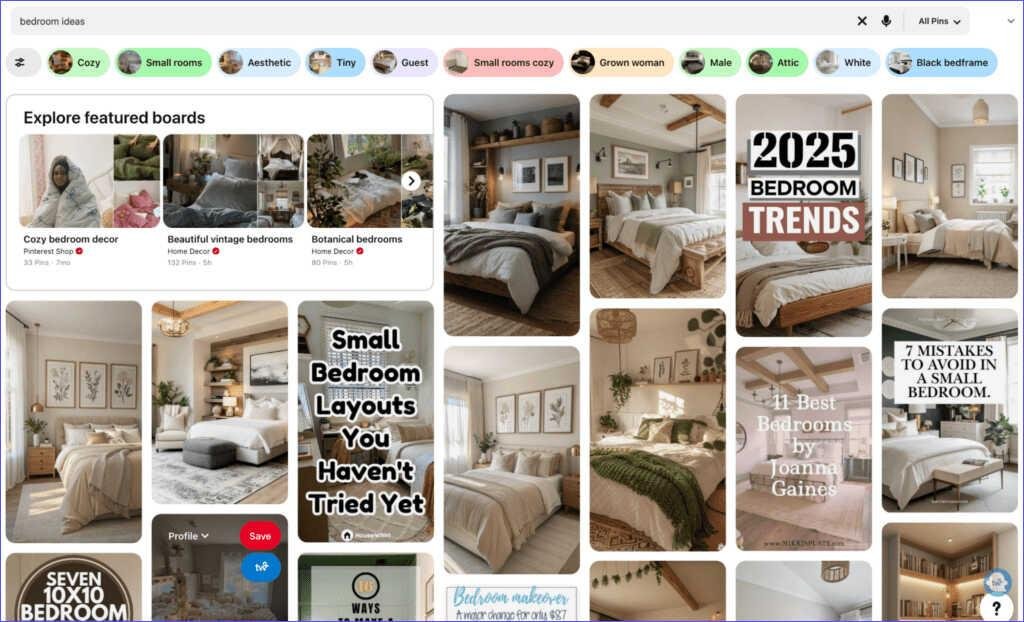
Pinterest functions like a visual search engine. Users actively search for specific products, making it easier to get your affiliate pins in front of interested buyers.
For example, a query such as “bedroom ideas” instantly shows options to identify styles that you might like.
Laura Thompson’s “OutdoorGearPro” pins targeting specific hiking gear keywords drive 65% of her affiliate commissions.
For beginners and experienced marketers alike, Pinterest offers a platform where your affiliate marketing efforts can compound over time, creating a sustainable passive income stream.
How does affiliate marketing work on Pinterest?
Pinterest affiliate marketing connects product creators with potential buyers through you as the middleman. You earn commissions by promoting products on Pinterest and driving sales. Here’s how it works:
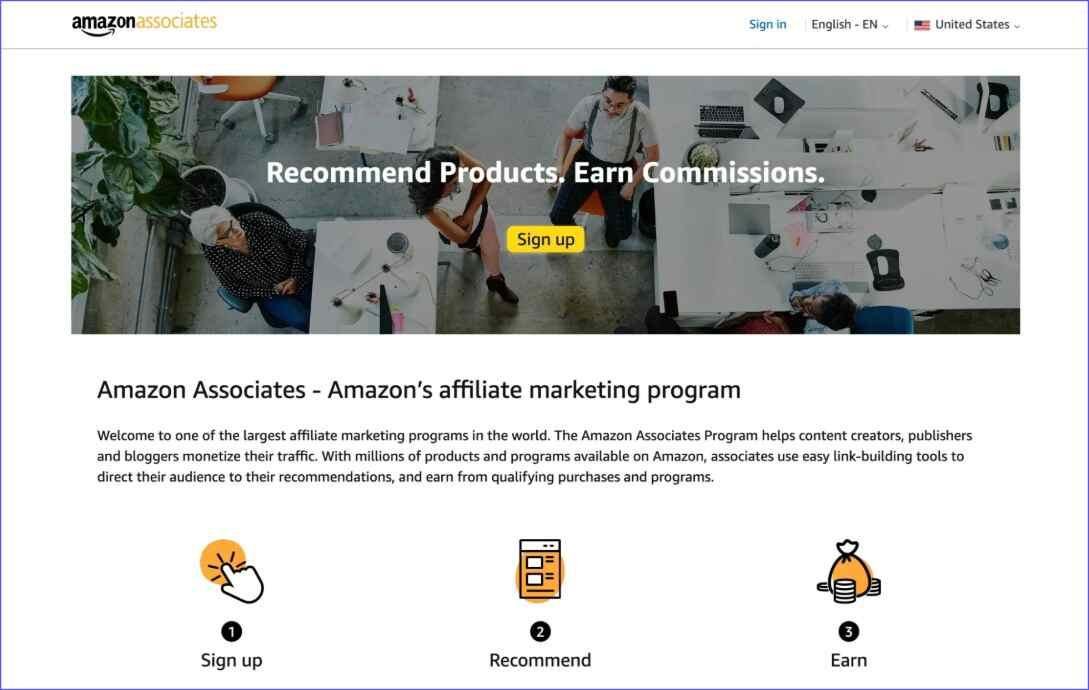
First, you need to sign up for affiliate programs relevant to your interests or niche. Popular options include Amazon Associates, Awin, and CJ Affiliate. Once approved, you’ll receive special tracking links for products you want to promote to make money with Pinterest.
Next, design attractive pins featuring the products you’re promoting. Use high-quality images, compelling descriptions, and clear calls to action.
Make sure your pins match Pinterest’s recommended dimensions (usually 2:3 ratio or 1000 x 1500 pixels) for best visibility.
When you upload your pins to Pinterest, include your unique affiliate tracking link in the destination URL. This ensures you get credit when someone clicks your pin and makes a purchase.
Some affiliate programs require you to disclose your affiliate relationship, so include phrases like “affiliate link” in your pin description.
Create themed boards related to your affiliate products. For example, if you’re using Pinterest affiliate marketing to promote kitchen gadgets, you might have boards for budget kitchen tools, time-saving appliances, or small kitchen solutions.
Share your pins consistently and strategically. Use relevant keywords in pin titles and descriptions to help them appear in Pinterest searches. You can also join group boards related your niche to expand your reach.
Monitor which pins generate the most clicks and sales using Pinterest Analytics and your affiliate program dashboard. When someone clicks your pin, visits the product’s website, and completes a purchase, you earn a commission.
How to start Pinterest affiliate marketing
Here are the steps you need to begin using Pinterest affiliate marketing.
Understand Pinterest demographics
Before diving in, you need to know who’s using Pinterest. The platform has over 450 million monthly active users, with around 70% being women and 22% men.
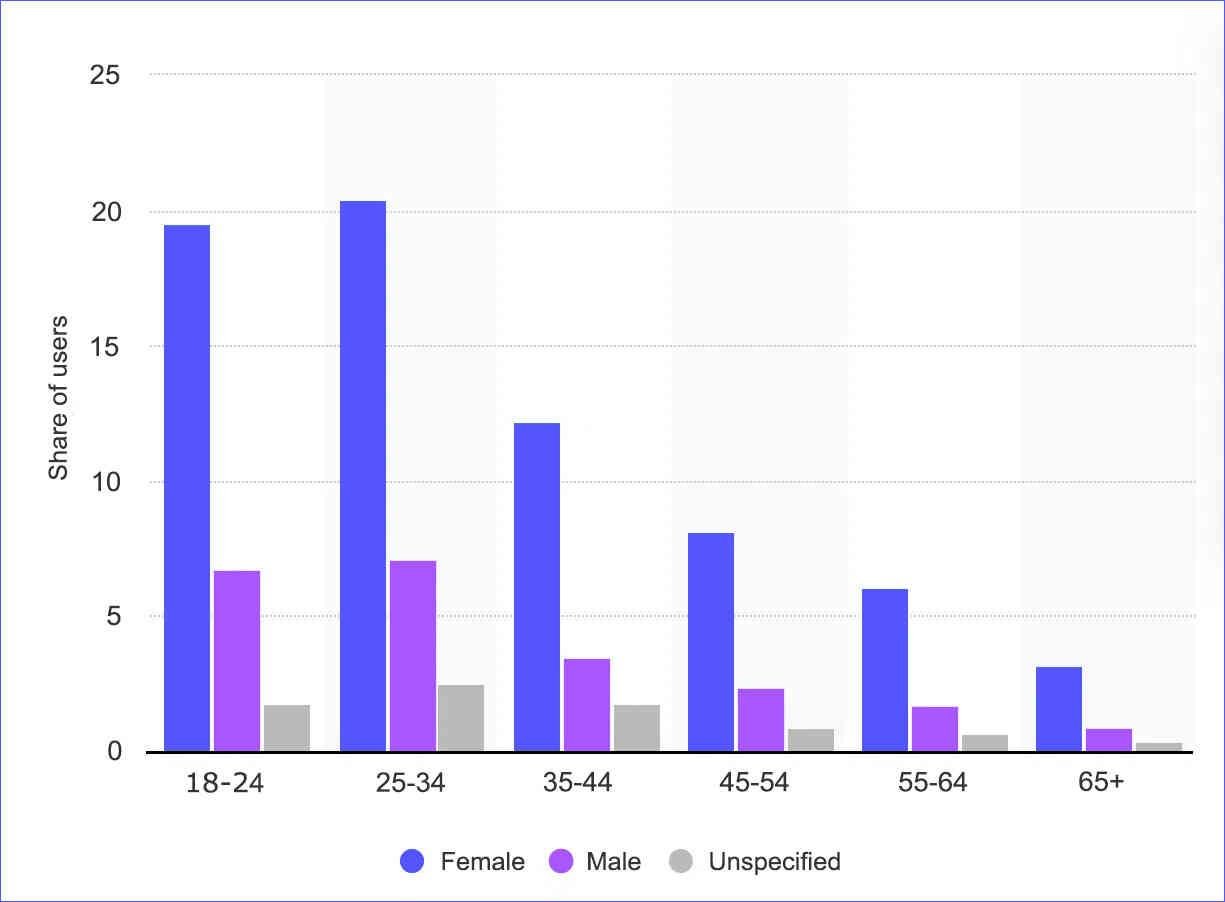
Most users (26%) fall between ages 25-34, followed by 35-44 (14.50%). Nearly 85% of Pinterest users use the platform to plan purchases.
To understand the demographics better, use Pinterest’s own business resources and tools like Audience Insights if you have a business account.
Pick a niche
When it comes to Pinterest affiliate marketing, selecting the right niche is crucial for standing out. Choose something specific enough to attract a focused audience but broad enough to offer plenty of product options. Look for niches with high demand but moderate competition.
Carlos Mendez of “TechGear Reviews” found success by narrowing his broad technology niche to focus specifically on home office equipment.
This targeted approach allowed him to become a trusted voice for remote workers looking to upgrade their setups, resulting in a 28% conversion rate on his affiliate links for ergonomic chairs and standing desks.
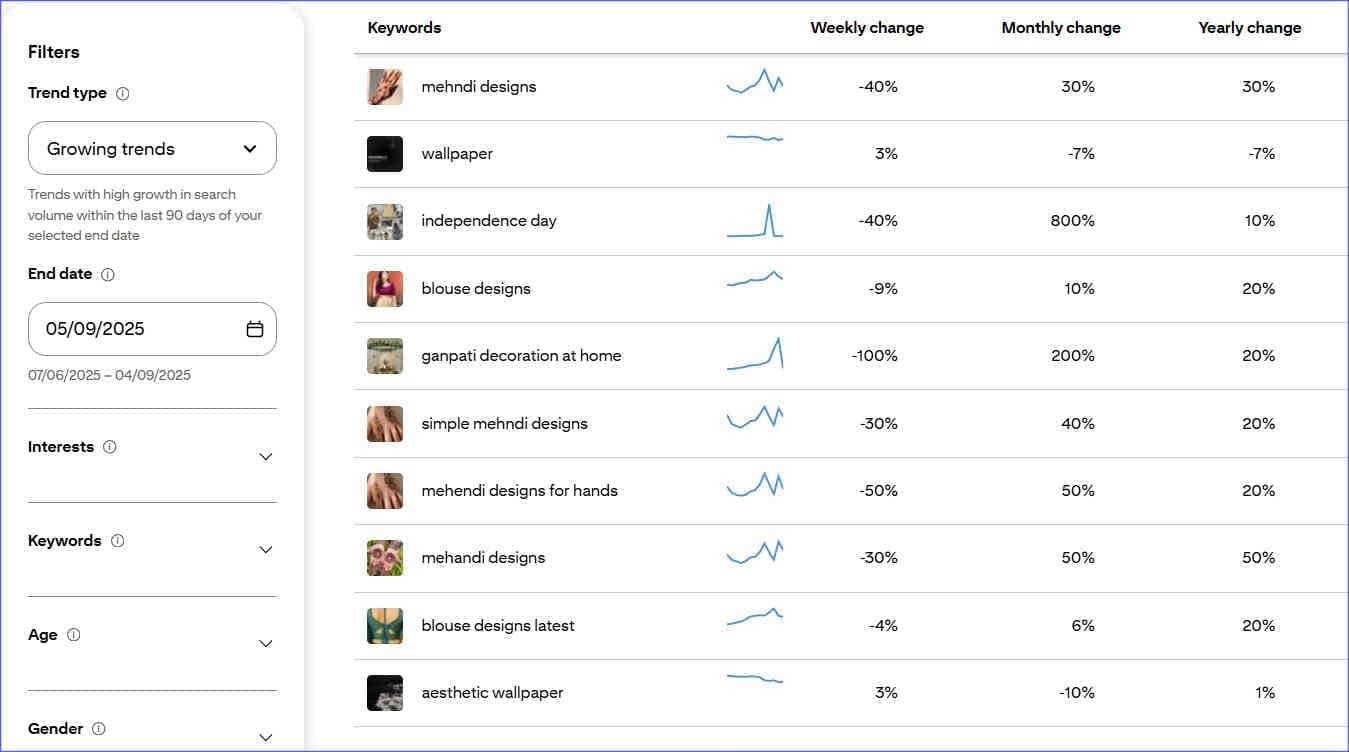
You can use tools like Pinterest Trends to identify popular topics and Google Keyword Planner to check search volumes for your potential niche.
Create a Pinterest profile
Set up a business account on Pinterest, which gives you access to analytics and promoted pins. Choose a username that’s relevant to your niche and is easy to remember.
Create your account at business.pinterest.com and use the setup wizard to connect to your website if you have one.
Optimize your Pinterest profile
As a part of your Pinterest affiliate marketing campaign, you need to craft a keyword-rich bio that clearly explains what you offer. Use a professional profile picture – either a high-quality headshot or your brand logo. Connect your Instagram and YouTube accounts if relevant.

You can use SEO tools like Ubersuggest to find relevant keywords for your bio.
For more information, check out this post on how to optimize your Pinterest profile.
Plan your Pinterest boards
One of the crucial steps to make money with Pinterest is to carefully plan your boards. Create 8-10 boards that align with your niche. Name boards using searchable terms rather than clever titles. Write keyword-rich descriptions for each board, and consider making some group boards to expand reach.
Here’s an example of how to segment your pins into boards based on destinations from Brogan Abroad.
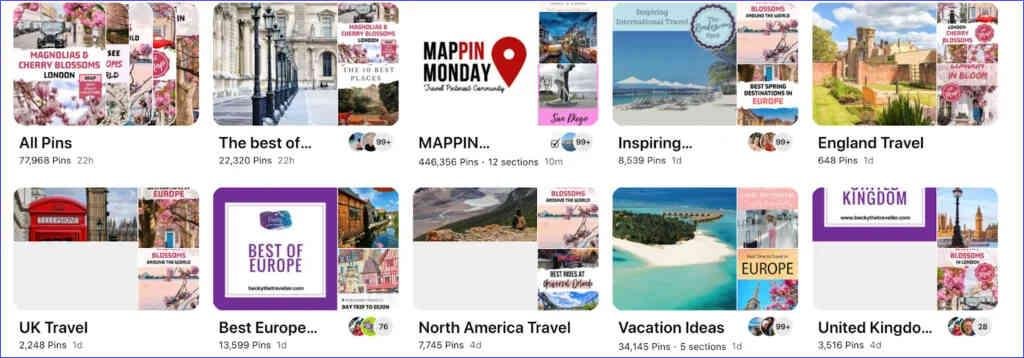
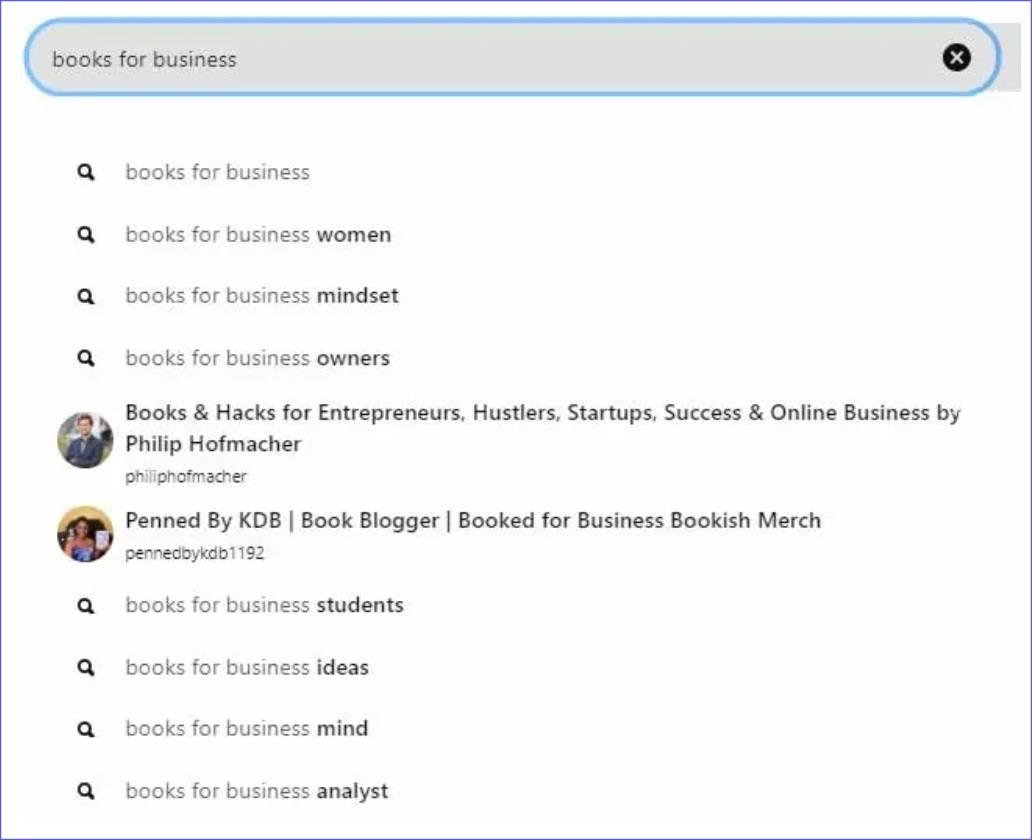
Use Pinterest’s search bar to see what terms autocomplete when you type in your niche keywords – these make excellent board names.
To know more, check out this blog post on how to create a Pinterest board.
Start creating pins
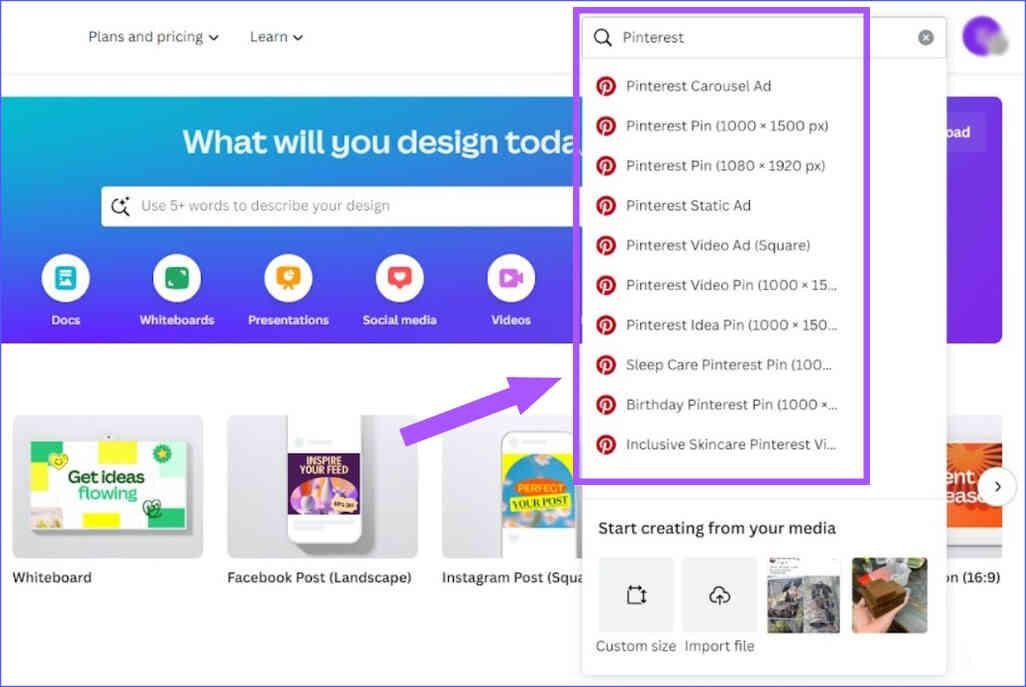
Design eye-catching pins for your Pinterest affiliate marketing campaign to stand out in the feed. Use a 2:3 ratio (1000×1500 pixels) for optimal display. Include clear, readable text overlay on bright images and craft detailed descriptions with keywords and calls to action.
Emma Chen’s “Sustainable Fashion Finds” pins use consistent brand colors, clear product photos against solid backgrounds, and include price points directly on the pins.
Her description format always includes the benefit, key features, and a subtle call to action.
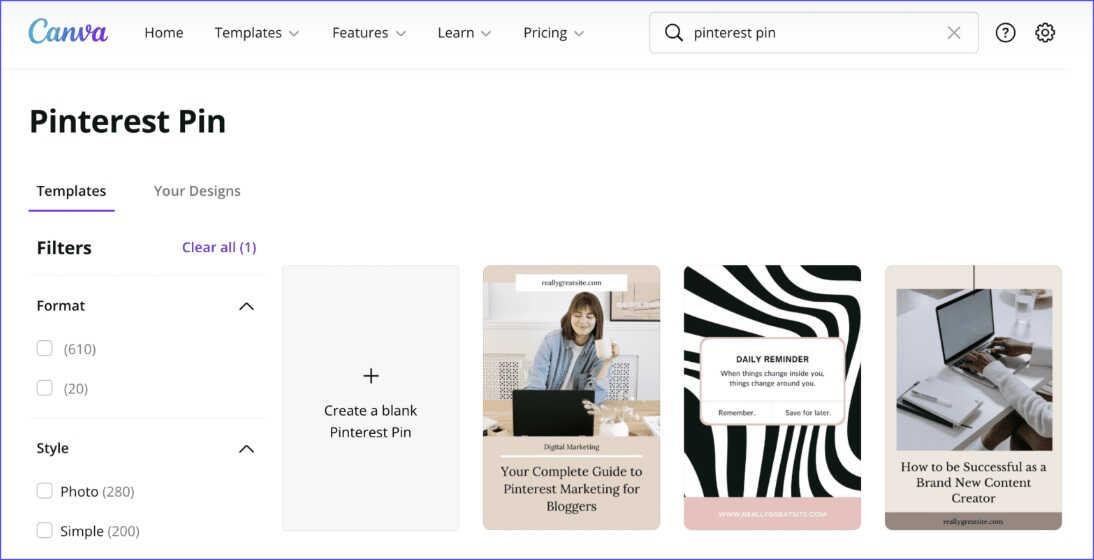
Use tools like Canva, which has Pinterest templates, to create professional-looking pins even without design experience.
Optimize your pins
Beyond basic design, optimize pins for Pinterest’s algorithm and searchability. You can do this in your Pinterest affiliate marketing strategy by focusing on strategic keyword placement in your pin titles, descriptions, and alt text. Use 2-4 relevant hashtags that aren’t too broad or too specific.
When researching keywords for affiliate products, use Pinterest’s search bar to find product-related searches.
Daniel Park of “Budget Travel Guide” increased his pin visibility by 64% after conducting keyword research and incorporating long-tail travel terms like “affordable European hostels under $30” instead of generic terms like “budget travel.”
Try tools like Tailwind’s Keyword Suggestions feature to find relevant keywords that actual Pinterest users are searching for, and always include at least one keyword in your pin title.
For more information, check out this article on ways to optimize pins for traffic.
Design engaging graphics for pins
Create pins that stop scrollers in their tracks. Use contrasting colors that pop against Pinterest’s white background. Keep text concise and use easy-to-read fonts. Create templates to maintain brand consistency across all pins.
Lisa Wong’s “Modern Home Designs” pins get saved 3x more often than competitors. That is because, while doing affiliate marketing in Pinterest, she uses a consistent color palette of navy blue and gold with clean, minimal backgrounds. This make her furniture affiliate products stand out.
She creates all her templates in Canva with the same font pairing and logo placement.
Besides Canva, you can try Adobe Express or PicMonkey for creating professional pin templates, and use color psychology to choose palettes that evoke the right emotions for your niche.
To learn more, read this post on how to design Pinterest graphics.
Redirect pins to affiliate links or a money page
Here’s a golden rule that no one will tell you when you are trying to make money with Pinterest. The bigger the investment, the longer the sales cycle.
And the longer the sales cycle, the more nurturing people need to make the purchase. And the more nurturing people need, the more pages are required in your sales funnel.
Let’s say you’re using Pinterest affiliate marketing to promote a complex product with a high price tag, like Semrush, the SEO software.
But you can’t directly send people to the ‘buy now’ page. They’ll need some convincing. So you should build an email list and nurture your audience with a series of useful content pieces. Then, slowly nudge them towards buying Semrush.
However, if you are promoting a simple and low-cost product that doesn’t require much thought, you can directly share your affiliate link. You won’t need to put in a lot of extra work or content to nurture leads.
You’ll be wise to remember this not just for Pinterest, but for any type of sales and marketing channel or campaign.
For complex products, never link pins directly to affiliate URLs. Instead, create “bridge pages” on your website that provide value before introducing affiliate links. Using this approach in your Pinterest affiliate marketing campaign builds trust and improves conversion rates.
James Harrison of “GolfGear Pro” increased his affiliate commissions by 89% after switching from direct affiliate links to content-rich landing pages.
His most successful page reviews five premium golf clubs, includes honest pros and cons, and then links to the products with his affiliate codes. This approach keeps visitors on his page longer and builds credibility.
Use a link management tool like Pretty Links or Thirsty Affiliates to create clean, branded links rather than long, suspicious-looking affiliate URLs.
For more details, take a look at this post on adding affiliate links on Pinterest.
Post 5-10 pins every day (but not just yours)
Maintain a consistent pinning schedule, but don’t just promote your affiliate content. Follow the 80/20 rule: 80% helpful, valuable content from others, and 20% your affiliate pins.
Sophia Martinez built “Mindful Parent Coach” into a $4,500/month affiliate business by consistently pinning 8 times daily using Tailwind’s scheduling feature.
Her board “Montessori Activities” features only 15% of her own pins leading to affiliate products, while 85% are high-quality pins from other creators that provide genuine value to her audience.
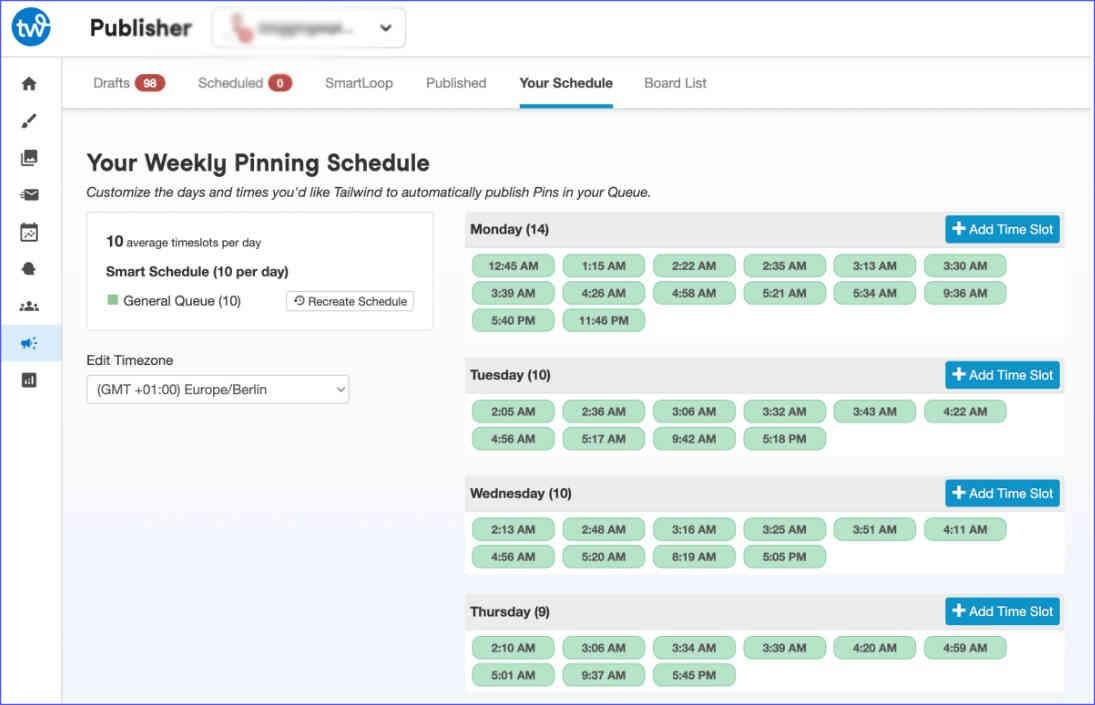
Use scheduling tools like Tailwind or Later for affiliate marketing on Pinterest. They can help you maintain consistency without spending hours on Pinterest daily. Even better, you can create a content calendar to plan your pinning strategy in advance.
Analyze performance and refine your strategy
Regularly check Pinterest Analytics to see which pins drive the most traffic and conversions. Pay attention to click-through rates, saves, and total impressions to identify patterns in successful content.
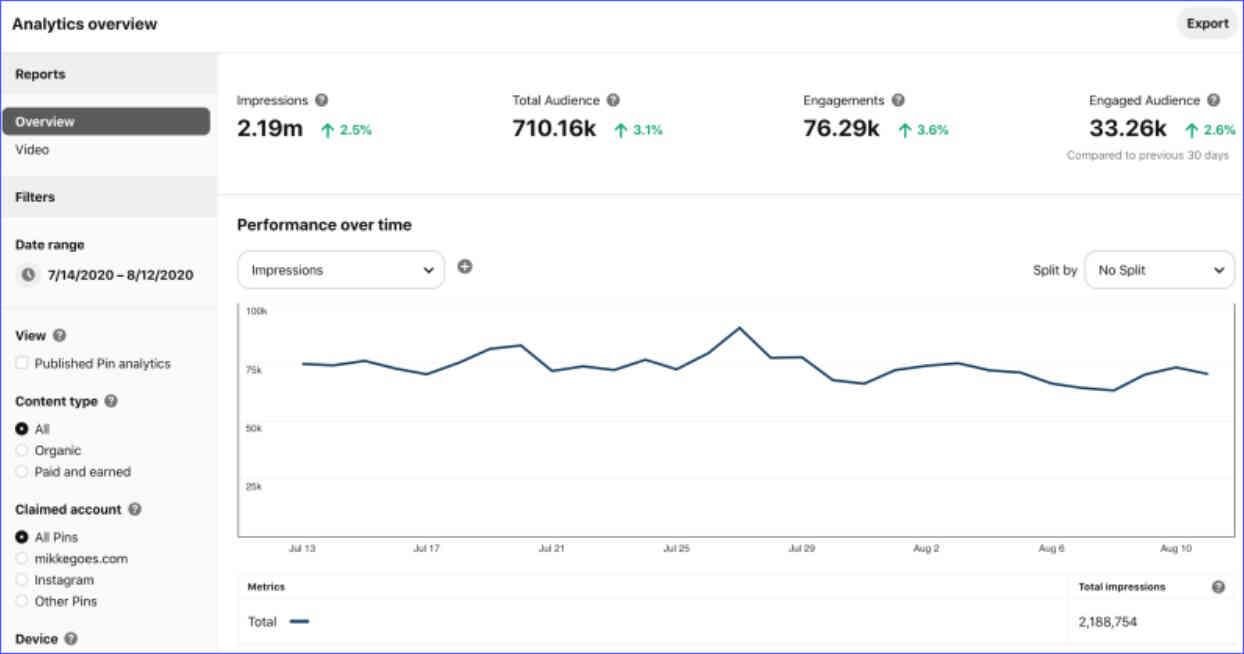
Alex Johnson of “Smart Home Hub” discovered through analytics that his pins about smart lighting systems performed 115% better when posted between 8-10 pm on weekdays.
He also noticed pins with price ranges in the title (like “Smart Thermostats Under $100”) had a 42% higher conversion rate than those without pricing information.
Set a monthly review date to analyze your top-performing pins, identify commonalities, and adjust your strategy accordingly.
Use Google Analytics alongside Pinterest Analytics by setting up UTM parameters for your pins to track which ones actually lead to affiliate conversions.
For more information, check out this guide on Pinterest Analytics.
Final thoughts on Pinterest affiliate marketing
Pinterest affiliate marketing offers a unique path to passive income. The key to making money with Pinterest is consistency and quality over quantity.
Start small and focus on pin quality rather than churning out dozens daily. Your pins should solve problems for your audience.
Remember that Pinterest success rarely happens overnight. Most successful affiliates I’ve interviewed didn’t see significant results until their 4th or 5th month.
Stay patient and keep refining your approach. The platform continues to evolve, but the fundamentals remain the same: create value first, promote second.
Did I miss anything? Did you try these tips? Do you have any questions or comments? Share your thoughts below in the comments section.