
Most founders struggle to make their business memorable, even when they have groundbreaking ideas.
The problem isn’t your product or service. It’s how you talk about it. Facts and figures might prove your point, but they rarely inspire action or stick in people’s minds.
What does? Brand stories.
Every successful startup has mastered the art of turning their mission into a narrative that resonates. They don’t just sell products; they share visions that people want to be part of.
Ready to transform your pitch from forgettable to unforgettable with startup storytelling? Let’s explore how to craft origin stories that win over investors, attract top talent, and turn customers into believers.
Disclaimer: If you buy any products through links on this site, I may earn a commission. But it doesn't make any difference to your cost, and it helps me keep this blog running. So you could always read my articles for free.
What is a startup story?
Before diving into specific techniques, let’s clarify what storytelling actually means for your startup. You’ll discover why it matters more than you think and how it shapes every interaction with your audience.
Storytelling for startups isn’t about making things up or exaggerating your achievements.
Instead, it’s the art of presenting your business journey in a way that connects emotionally with people. Think of it as translating complex ideas into relatable experiences.
Here’s the deal: every startup begins with a problem someone wants to solve. That’s your company story’s foundation.
But wait, there’s more to it. Your story includes the struggles you faced, the breakthroughs you achieved, and the impact you’re making.
For example, instead of saying, “we provide cloud storage solutions,” you might share how your founder lost important files and decided no one should experience that frustration again.
See the difference? The first statement informs; the second connects.
The best part? Good storytelling works everywhere. You’ll use it in pitch decks, on your website, during interviews, and even in casual conversations.
It helps investors understand your vision, attracts customers who share your values, and brings in team members who believe in your mission.
The bottom line is this: storytelling transforms your startup from just another company into a movement people want to join. It’s not about being the loudest voice in the room. It’s about being the most memorable one.
Why is storytelling important for startups?
Now that you understand what startup storytelling means, let’s explore why it deserves your attention. You’ll see how stories can make or break your startup’s success in ways you might not expect.
Stories stick when facts fade
Let’s face it: people forget statistics, but they remember stories. You could tell someone your app increased productivity by 47%, and they’ll forget by lunch.
But share how a single parent used your app to finish work early and make it to their kid’s soccer game? That sticks.
Here’s why: our brains are wired for narratives. Business stories trigger emotions, and emotions drive decisions. In fact, research shows people remember stories up to 22 times better than facts alone.
Building trust through transparency
Besides memorability, stories build something crucial for startups: trust. When you share your journey honestly – including the setbacks and pivots – you become human, not just another faceless company.
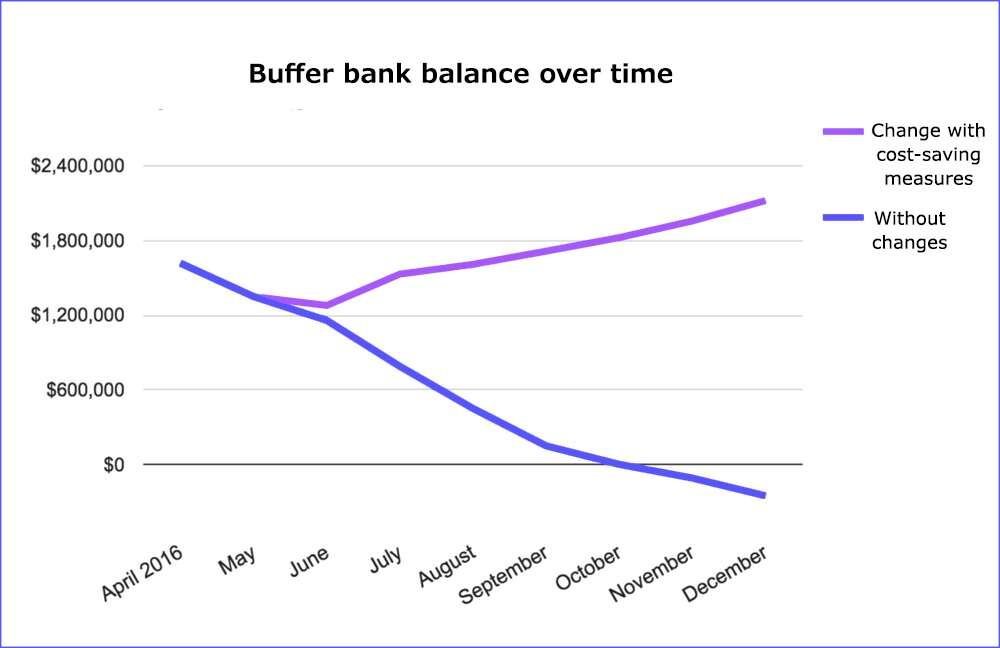
For example, Buffer’s transparency about their financial struggles and eventual recovery in their startup storytelling strategy earned them loyal customers who felt invested in their success. The result? People rooted for them because they felt part of the brand story.
Standing out in crowded markets
Unfortunately, most startups sound identical when describing what they do. “We leverage AI to optimize workflows.” Sound familiar? But when you lead with a story about why you started, you immediately differentiate yourself.
Storytelling isn’t just nice to have; it’s essential for survival. It helps you attract investors who believe in your vision, customers who become advocates, and employees who work with purpose.
Without a compelling origin story, you’re just another startup in an endless sea of competitors.
Components of a great startup story
Ready to craft your startup’s story? Let’s break down the essential elements of startup storytelling that transform a basic company description into a narrative that captivates audiences. You’ll learn what to include and how these pieces work together.
The problem that sparked everything
First of all, every great startup story begins with a problem worth solving. Not just any problem – one that frustrates real people every day. Share the specific moment or experience that made you say, “There has to be a better way.”
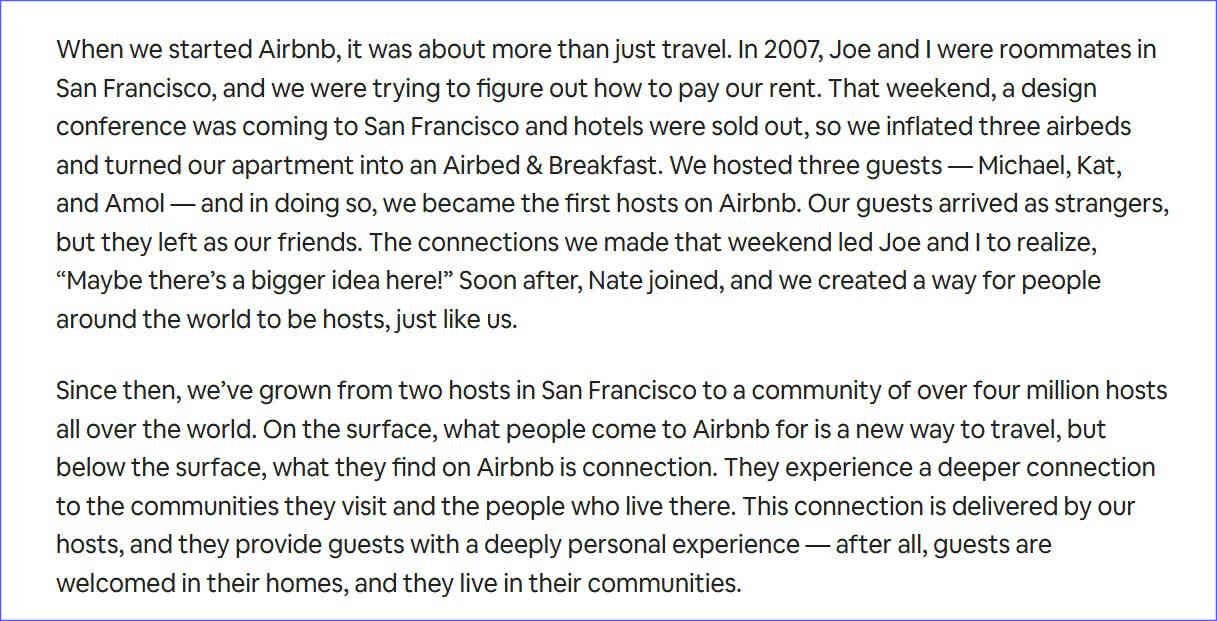
For example, Airbnb’s story started with two founders who couldn’t afford rent and decided to rent out air mattresses during a conference. That’s relatable and human, not corporate speak about “disrupting the hospitality industry.”
Your personal connection
Here’s the deal: people invest in people, not just ideas. Why did this problem matter to you personally? What drove you to quit your job or spend nights and weekends building a solution?
Take Pat Brown, who abandoned his job as a biochemistry professor to launch Impossible Foods in 2011. His goal? Protect the Earth by producing plant-derived meat substitutes that mimic the taste of traditional meat.
This powerful startup storytelling led Impossible Foods to be valued at around $10 billion and to collaborate with well-known chains such as Burger King.

The best part? This doesn’t need to be dramatic. Maybe you were simply tired of wasting time on inefficient processes. Or perhaps you watched a family member struggle with something that seemed fixable. Whatever it is, make it genuine.
The journey, not just the destination
Unfortunately, most startups skip straight to their current success. But audiences connect with the struggles and pivots along the way.
Did your first prototype fail spectacularly? Did you almost run out of money? These moments make your company story authentic.
The global coffee giant Starbucks managed to recover from the 2008 financial crisis by realigning its business strategies with customer expectations using social media channels. This case analysis explores the effective actions the company took to accomplish this revival.
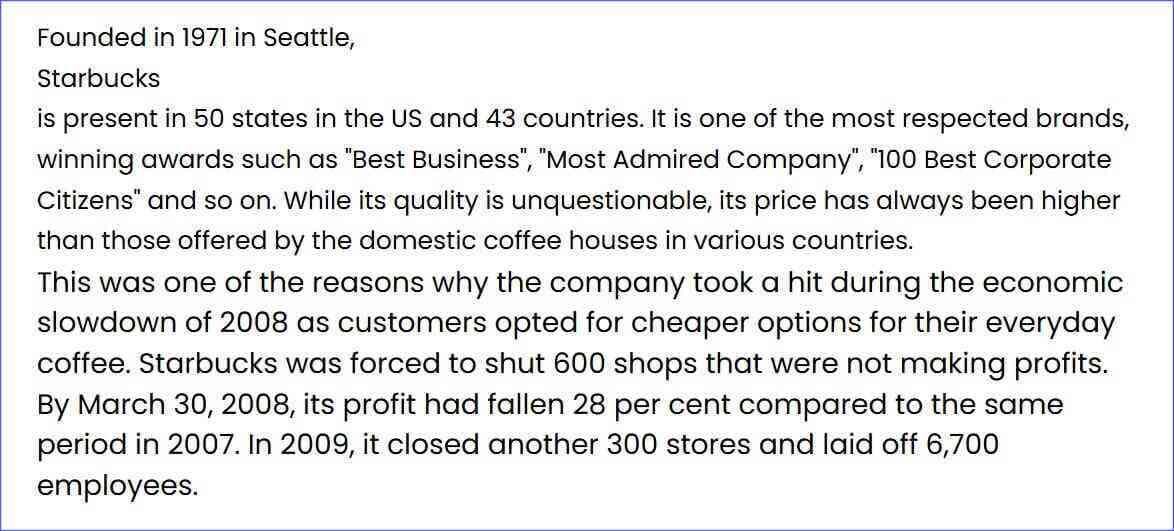
Besides that, sharing challenges as a part of startup storytelling shows resilience. It proves you’ll stick around when things get tough – something investors and customers need to know.
The transformation you create
So, you’ve identified the problem and shared your journey. Now what? This is the part of your brand story where you paint a picture of the change you’re creating. But wait – don’t just list features. Instead, show how people’s lives improve because of your solution.
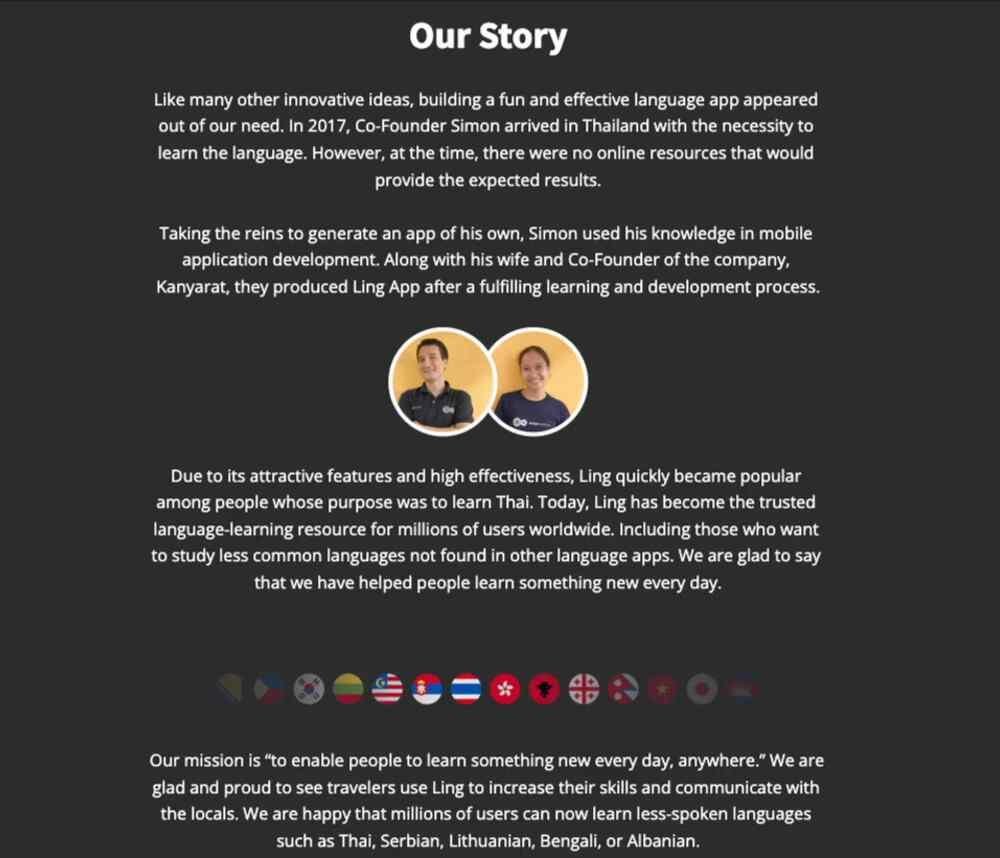
Ling is an interactive language study platform with a widely read blog. The couple behind it recognized a gap (learning Thai) and decided to address it using their background in building mobile apps. From that starting point, the project expanded, and they’ve stayed committed to their vision of enabling people to acquire a growing variety of languages.
For instance, instead of “our software automates invoicing,” try “small business owners now spend evenings with family instead of chasing payments.”
Your vision for what’s next
That’s not all. Great startup stories don’t end with today. They point toward a bigger future. Where do you see this going? What world are you helping to build?
Nevertheless, keep this vision grounded. Storytelling for startups isn’t about impressing with buzzwords but about inspiring with possibility. Think less “revolutionizing paradigms” and more “imagine if every teacher had these tools.”
Making it memorable
These components work together like chapters in a book. The problem hooks attention, your personal connection builds trust, the journey creates empathy, the transformation demonstrates value, and the vision inspires action.
The bottom line is that your startup story needs all these elements to resonate. Miss one, and you’re just another pitch deck. Include them all, and you create an origin story that people remember, share, and want to support.
How to create a compelling story for your startup
Now you know what makes a great startup story. Let’s walk through the practical steps to create your own. You’ll get a clear roadmap to transform your ideas into a company story that resonates with your audience.
Identify your core problem
First of all, dig deep into the problem you’re solving. But here’s the catch. When storytelling for startups, you need to go beyond surface-level descriptions. Ask yourself: What specific moment or experience crystallized this problem for you?
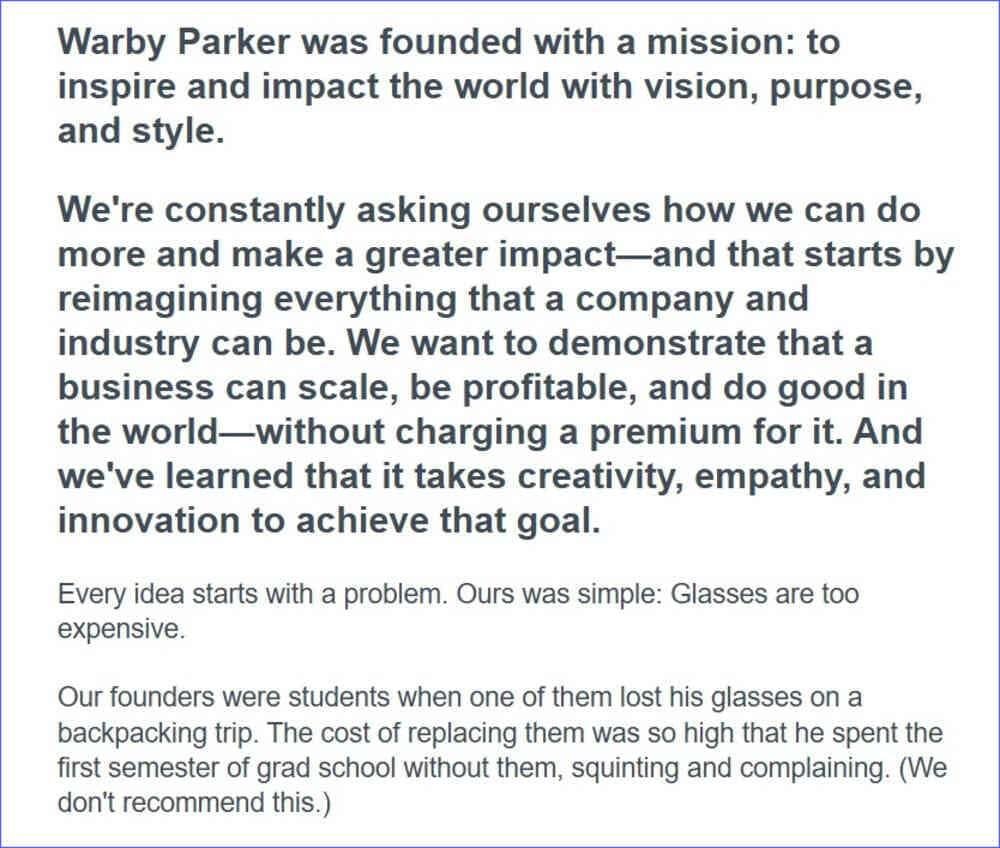
For instance, Warby Parker’s backstory connects with people since it started when a co-founder misplaced a costly set of spectacles and lacked the funds to buy another. This annoyance exposed the dominance of a few players in the eyewear market, making their goal of challenging the system immediately understandable.
For example, don’t just say, “scheduling meetings is inefficient.” Instead, recall that Tuesday when you spent three hours in back-and-forth emails trying to find a time that worked for five people. That’s tangible and relatable.
The best part? You probably have dozens of these moments to choose from for your startup storytelling strategy. Pick the one that makes people nod their heads and think, “Yes, I’ve been there too.”
Find your why
Let me guess – you didn’t start your company just to make money. There’s something deeper driving you.
Maybe you watched your mom struggle with outdated medical systems. Or perhaps you got fed up seeing talented friends stuck in dead-end jobs.
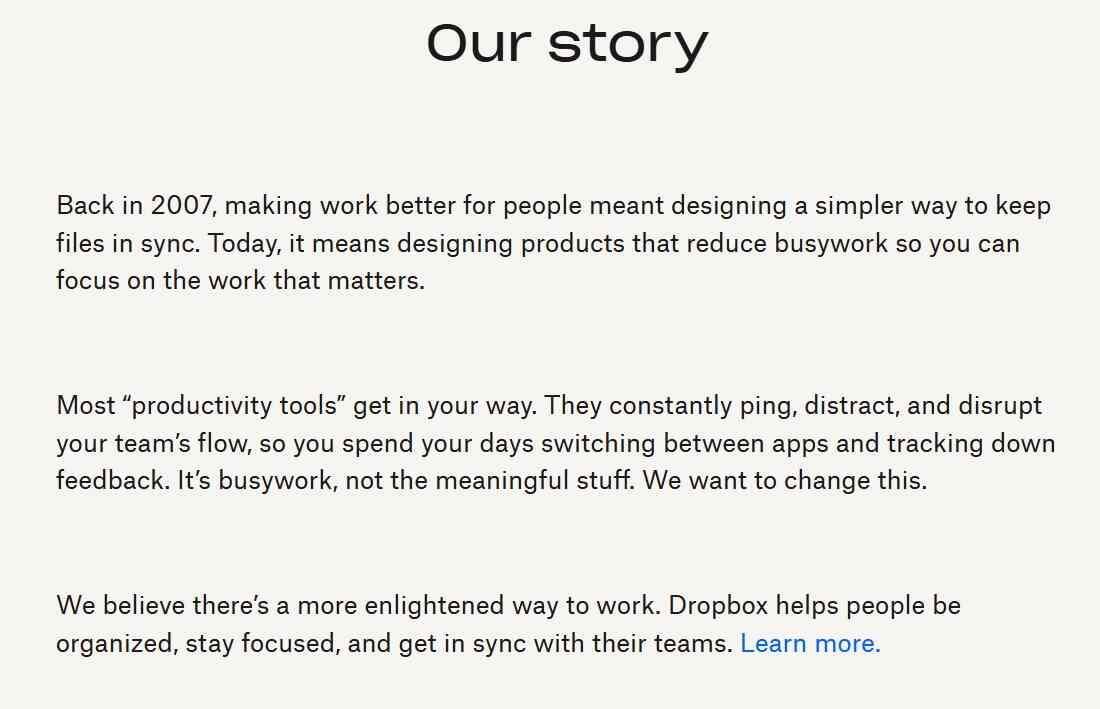
For instance, Dropbox effectively communicated the reasoning behind the “why now” moment:
Here’s how to uncover your real why: Write down what annoys you about the current situation. Then ask, “why does this matter?” Keep asking why until you hit something emotional. That’s your core motivation.
Map your journey honestly
Unfortunately, many founders sanitize their brand stories. They skip the messy parts. Don’t do that. Your struggles make your success believable. So grab a piece of paper and create a timeline. Include:
- Your first attempt (and why it didn’t work)
- The moment you almost gave up
- The breakthrough that changed everything
- Small wins that kept you going
In fact, these low points often become the most powerful parts of storytelling for startups. They show you’re human and persistent.
Collect transformation stories
Look, features don’t sell – transformations do. You need real examples of how your product changes lives. But wait, don’t just ask customers for testimonials. Instead, have conversations about their experience.
Here’s a simple approach: Call five customers and ask:
- What was life like before our product?
- What specific moment made you realize things had improved?
- What can you do now that you couldn’t before?
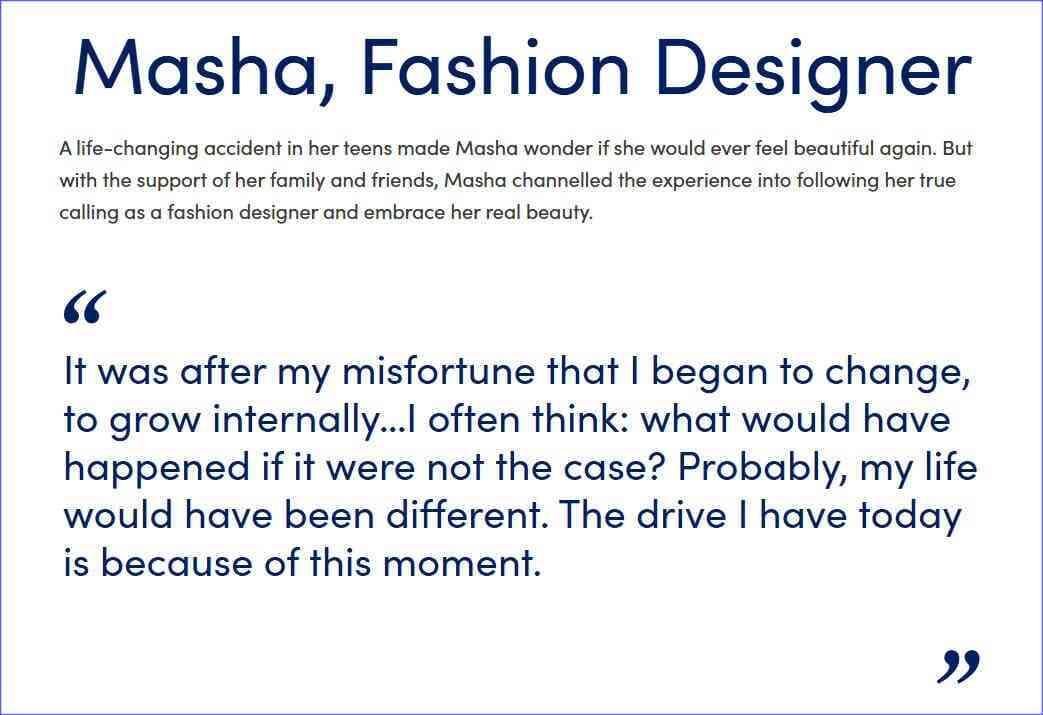
For example, customer experience from Dove’s “Real Beauty campaign”:
The result? You’ll have authentic business stories that prove your impact better than any statistic.
Craft your vision statement
Besides solving today’s problem, where are you headed? Your vision shouldn’t be vague like, “changing the world.” Make it specific and visual.
For instance, instead of “revolutionizing education,” try “imagine every student having a personal AI tutor that adapts to how they learn best.” See how the second version helps people picture the future?
For more information, read this post on how to write a vision statement.
Write multiple versions
Here’s the deal: you need different story lengths for different situations. Create:
- A 30-second elevator pitch
- A 2-minute investor preview
- A 5-minute detailed version
Start with the longest version, then cut ruthlessly. Each shorter version should hit the emotional high points while skipping supporting details.
Test with real people
That’s not all – you need feedback to ensure the success of your startup storytelling strategy. Share your origin story with people outside your industry. Watch their faces. Where do they lean in? Where do their eyes glaze over?
After each test, ask:
- What parts confused you?
- What made you want to know more?
- What would you tell others about us?
Their answers will show you what’s working and what needs work.
Practice until it’s natural
Even the best story falls flat if it sounds rehearsed. You want to sound like you’re sharing with a friend, not reciting a script.
The solution? Practice telling your company story in different settings. Tell it over coffee, during walks, and at networking events. Each time, adjust based on your audience’s reactions. Soon, it’ll flow naturally.
Keep it fresh
Your story isn’t set in stone. As your startup grows, new chapters emerge. Maybe you discovered a use case you never imagined. Or perhaps a customer story tops anything you expected.
In short, revisit your story every few months to improve your startup storytelling strategy. Add new examples, update outdated references, and refine what isn’t landing. A living story stays relevant and engaging.
Final thoughts on storytelling for startups
Creating your startup story takes time and iteration. Start with these steps, but don’t aim for perfection on the first try. Your brand story will evolve as you tell it and as your startup grows.
Remember, you’re not crafting marketing copy. You’re sharing why your work matters. When you nail that, everything else – from fundraising to hiring to sales – becomes easier.
People don’t just understand what you do; they understand why it matters and want to be part of it.
Did I miss anything? Did you try these tips on storytelling for startups? Do you have any questions or comments? Share your thoughts below in the comments section.