
Feeling disappointed with Fiverr? You’re not alone. I have used it multiple times over the years to outsource small tasks. And every time, I have regretted it. In fact, I’d say the whole thing is mostly a scam.
While Fiverr has become a household name for freelance services, it’s not the only player in town. Different platforms offer unique features, pricing structures, and talent pools that might actually work better for your specific projects.
Some Fiverr competitors focus on premium professionals, others on quick turnarounds, and a few specialize in specific industries.
We’ll explore the top Fiverr alternatives that freelancers and businesses are using right now.
Disclaimer: If you buy any products through links on this site, I may earn a commission. But it doesn't make any difference to your cost, and it helps me keep this blog running. So you could always read my articles for free.
Why consider Fiverr alternatives
Before you commit to any freelance platform, it helps to understand why millions of users explore beyond Fiverr. Let’s look at the common reasons that push both freelancers and clients to check out other tools similar to Fiverr.
First of all, Fiverr’s fee structure can eat into your budget. The platform takes 20% from sellers and charges buyers a service fee on top of the project cost. For a $100 project, you might actually pay $105.50, while the freelancer only receives $80. These fees add up quickly, especially for regular users.
Besides that, finding quality talent on Fiverr can feel like searching for a needle in a haystack. With millions of gigs available, you’ll spend hours comparing options, reading reviews, and messaging sellers.
And if that isn’t enough reason to look for alternatives to Fiverr, here’s more: even five-star reviews don’t guarantee you’ll get what you need.
In my experience, the Fiverr management and freelancers have rigged the system in such a way that freelancers get fewer negative reviews. And Fiverr’s in on it too, because it makes their platform seem like it’s filled with high-rated freelancers.
For example, let’s say you place an order on Fiverr on a freelancer’s gig. Over the course of this gig, if you’re not satisfied with the ongoing work and communication, the freelancer can hold off on concluding the gig.
And since only the freelancer can close a gig, he can prevent you from leaving a negative review by choosing not to conclude the order, for months. Reaching out to Fiverr support doesn’t help either, because they side with the freelancer.
Another reason to look for Fiverr alternatives is that the platform’s structure creates limitations.
Fiverr’s gig-based system works great for one-off tasks, but gets complicated for ongoing projects or complex work that needs regular communication. Similarly, the emphasis on quick turnarounds sometimes means quality takes a back seat.
Top alternatives to Fiverr
Now that you understand why people look beyond Fiverr, let’s examine popular alternatives. Each platform brings something different to the table, from pricing models to talent quality to specific features that might match your needs perfectly.
Upwork
Upwork operates differently from Fiverr’s gig marketplace. Instead of browsing pre-packaged services, you post your project and receive proposals from interested freelancers.
This Fiverr competitor charges sliding fees based on your relationship with each freelancer. You’ll pay 10% on earnings over $10,000 with the same client, which drops to 5% after that.
For freelancers, this structure rewards long-term relationships. For clients, the hourly tracking software provides screenshots and activity levels, so you know exactly what you’re paying for.
Here’s the deal: As a Fiverr alternative, Upwork shines for ongoing projects and building lasting work relationships. The platform’s escrow system protects both parties, and dispute resolution actually works when things go sideways.
Unfortunately, the initial setup takes more time than Fiverr, and you’ll need to write detailed job descriptions to attract quality proposals.
Freelancer.com
Freelancer.com is a platform like Fiverr, but it takes the competition aspect and cranks it up. You post a project, set your budget, and watch freelancers bid against each other.
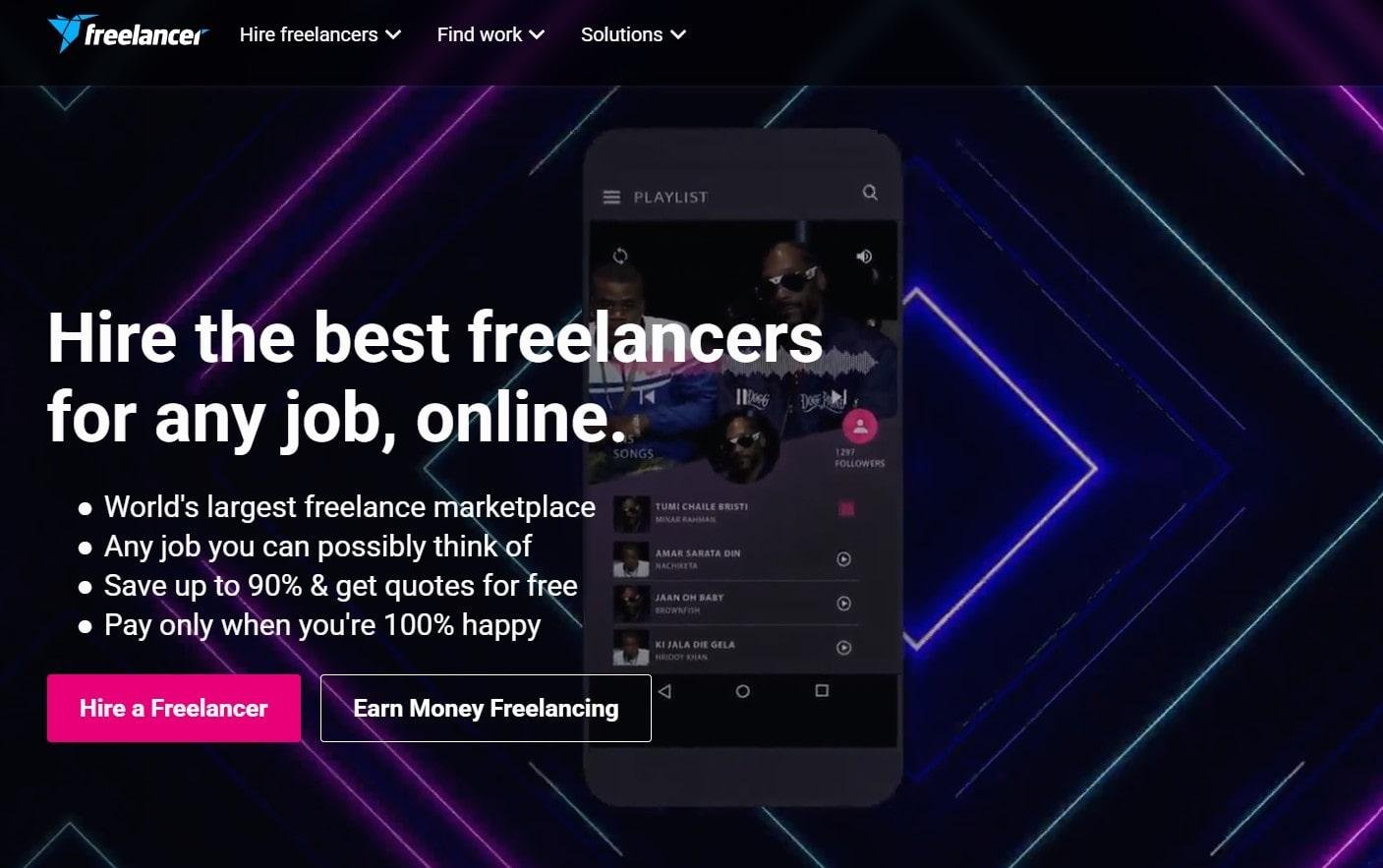
Sometimes you’ll get 50+ bids within hours, with prices ranging from suspiciously low to surprisingly high.
The best part? You can run contests where multiple freelancers submit actual work, and you only pay for the one you choose.
Compared to other alternatives to Fiverr, Freelancer.com works particularly well for design projects. Especially if you want to see different creative approaches. The platform also offers milestone payments, letting you break large projects into smaller, manageable chunks.
Nevertheless, the sheer volume of bids can overwhelm you. Many low-quality providers flood the platform with copy-paste proposals, and sorting through them takes patience.
Also, the platform charges various fees that aren’t always transparent upfront – from project posting fees to currency conversion charges.
Toptal
Toptal is a tool similar to Fiverr that positions itself as the exclusive club of freelance platforms. They claim to accept only the top 3% of applicants through their rigorous screening process. And you know what? The quality difference shows in the work delivered.
When you submit a project, Toptal matches you with pre-vetted candidates within 24 hours. No browsing through hundreds of profiles or reading dubious reviews.
This Fiverr alternative handles the matchmaking based on your specific requirements, timeline, and budget. If the first match doesn’t work out, they’ll find you another one fast.
The only problem? Premium talent comes with premium prices. You’ll pay significantly more than on Fiverr or Upwork.
Still, for mission-critical projects where quality matters more than cost, Toptal delivers. They specialize in developers, designers, and finance experts, so don’t expect to find content writers or social media managers here.
99designs
If you are looking for Fiverr alternatives for design work specifically, 99designs offers a unique approach. Instead of hiring one designer and hoping for the best, you can launch a design contest where dozens of designers submit concepts based on your brief.
Here’s how it works: you describe what you need, set a prize amount, and designers start submitting ideas. You provide feedback, request revisions, and ultimately choose a winner who gets paid. The platform guarantees you’ll get designs you love, or they’ll refund your money.
Besides that, 99designs also offers direct hiring if you prefer working one-on-one with a designer. The platform includes proper legal transfers of intellectual property, which matters when you’re creating brand assets.
Unfortunately, it’s only useful for design work – if you need writing, programming, or other services, you’ll need to check out other competitors of Fiverr.
Also, the contest approach sounds great on paper, but be ready for a lot of grunt work. If you launch a contest, you’ll have to spend hours evaluating and providing feedback to dozens of contest participants, most of whom are not very good at design.
PeoplePerHour
PeoplePerHour sits somewhere between Fiverr’s simplicity and Upwork’s complexity. Freelancers can offer fixed-price “Hourlies” (similar to Fiverr’s gigs) or you can post projects for custom proposals.
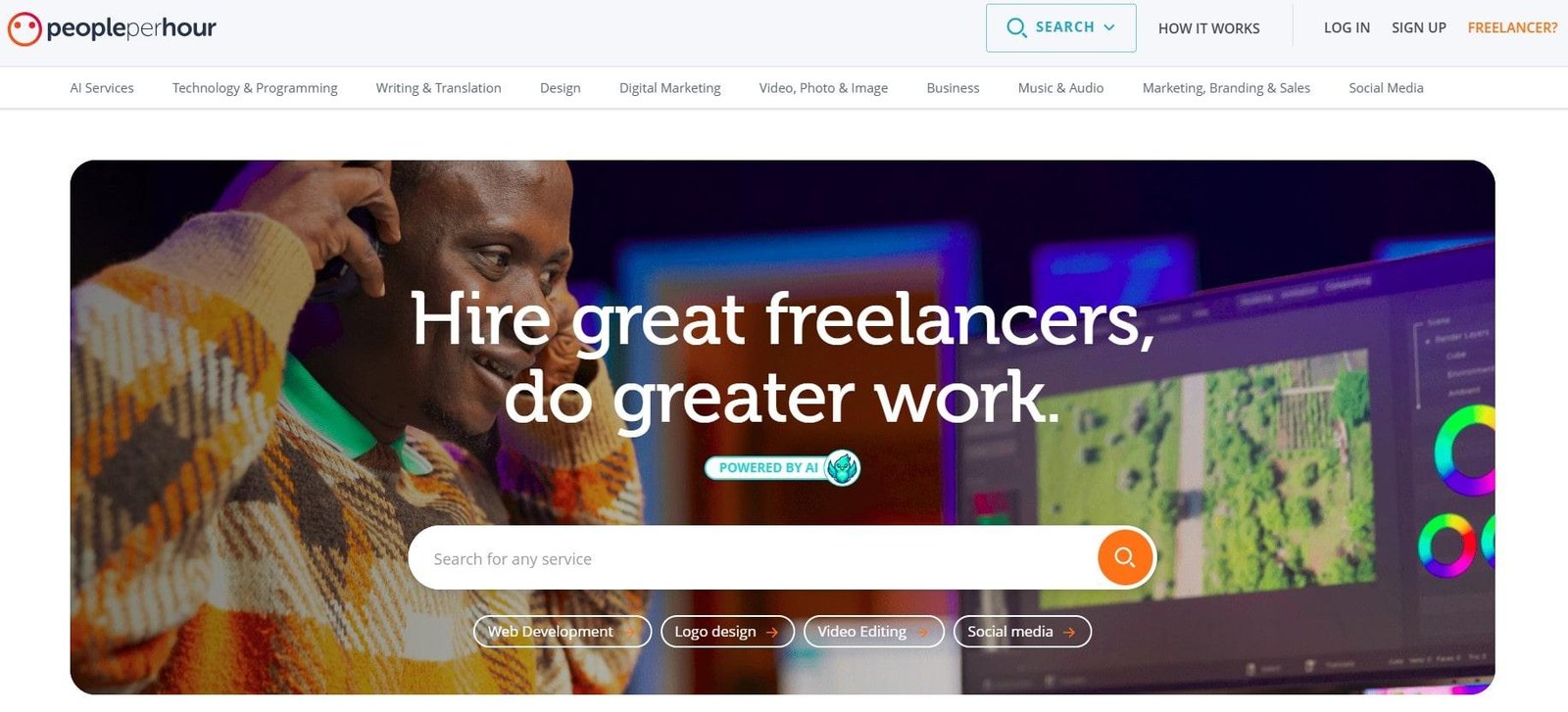
The platform focuses heavily on UK and European freelancers, which helps if you need a tool like Fiverr to get work done in specific time zones or languages.
Their AI-powered matching system actually works pretty well, suggesting relevant freelancers based on your project description. Plus, the escrow system releases payments automatically when you mark milestones as complete, reducing payment friction.
In fact, PeoplePerHour’s fee structure favors smaller projects. They charge 20% on the first £350 billed to each client, then 7.5% up to £5,000, and 3.5% beyond that. This makes it an attractive alternative to Fiverr for testing new freelancers without committing to large projects.
Guru
Guru takes a different approach by focusing on building trust between freelancers and clients.
The platform’s WorkRoom feature creates a shared space where you can manage everything – from communication to file sharing to payments – without juggling multiple tools.
What sets Guru apart is its flexible payment terms. You can pay hourly, per task, milestone-based, or recurring for ongoing work. The platform even supports daily payments if you need that level of control.
And here’s the kicker: Guru charges lower fees than most competitors, with freelancers paying 5-9% depending on their membership level. So if you are in need of a tool similar to Fiverr but at a lower price, Guru might be an option.
The SafePay system works like escrow but with more flexibility. You fund it upfront, giving freelancers confidence they’ll get paid, while you maintain control over releasing funds.
Similarly, the platform’s job matching sends your posting directly to relevant freelancers, cutting down on spam proposals.
The only problem? Guru is a Fiverr alternative with a smaller user base, which means fewer options in specialized niches. You’ll find plenty of developers and designers, but niche experts might be harder to locate. Still, the freelancers who are there tend to be serious professionals looking for stable work relationships.
Contra
Contra shakes up the traditional model by charging zero commission fees. Yes, you read that right – freelancers keep 100% of their earnings, and clients pay exactly what they agree to.
So how do they make money? Through optional paid features and their Contra Pro subscription.
Although Contra is considered to be a tool like Fiverr, it feels more like a professional portfolio network than a traditional job board.
Freelancers create beautiful, customizable profiles that showcase their work like an interactive resume. For clients, this means you can actually see the quality of work before reaching out.
Besides that, Contra emphasizes independent professionals over agencies or teams. Every freelancer goes through identity verification, reducing fake profiles and scams.
The platform also includes built-in contracts and invoicing, eliminating paperwork headaches.
Nevertheless, being relatively new compared to other alternatives to Fiverr means Contra has a smaller talent pool. You’ll find cutting-edge creative professionals and tech freelancers, but fewer options for traditional business services.
Also, without platform fees acting as a buffer, dispute resolution relies more on direct communication between parties.
We Work Remotely
We Work Remotely flips the script entirely. Instead of browsing freelancer profiles or posting projects for bids, you post a job listing that attracts applicants. Think of it as hiring a remote employee rather than engaging a freelancer.
Here’s how it differs from other Fiverr competitors: you pay a flat fee to post your job (currently $398 for 30 days), then handle everything else directly with candidates. No platform fees, no escrow systems, no middleman. You get full control over the hiring process, payment terms, and work arrangements.
The platform attracts serious professionals looking for substantial projects or ongoing work. You won’t find someone to design a quick logo here, but you might find a developer willing to commit three months to rebuilding your app.
In fact, many companies use We Work Remotely to find long-term contractors who become integral parts of their teams.
Unfortunately, this approach requires more work on your end. Unlike other Fiverr alternatives, you’ll need to handle contracts, payments, and potential disputes yourself.
There’s also no rating system or work history to review – you’re relying on traditional hiring methods like portfolios and references.
Dribbble
Dribbble started as a show-and-tell site for designers but evolved into a hiring platform. Unlike traditional freelance marketplaces, Dribbble lets you browse through actual design work, then reach out to creators whose style matches your vision.
The platform’s job board works both ways. You can post a project and receive applications, like on most platforms similar to Fiverr, or actively search through designer profiles and invite specific people to work with you.
The best part? You’re seeing real work from real projects, not just polished portfolio pieces that might not reflect actual client work.
Dribbble Pro accounts (for freelancers) include features like custom portfolio URLs and advanced analytics, attracting serious designers who invest in their professional presence. For you, this means fewer hobbyists and more committed professionals.
Let’s face it though – Dribbble only makes sense for design work. If you need illustration, UI/UX design, or brand identity work, it’s perfect.
For anything else, you’ll need to look at other platforms like Fiverr. Also, there’s no built-in payment protection or project management tools.
SolidGigs
SolidGigs is a Fiverr alternative that takes an entirely different angle. Instead of being a marketplace, it’s a service that curates freelance opportunities from around the web.
They scan hundreds of job boards, company websites, and freelance platforms, then send the best opportunities to their members.
For freelancers, this means less time hunting for work. For clients, it means your job postings on various platforms might attract higher-quality candidates who find you through SolidGigs.
The platform also offers courses, templates, and tools to help freelancers improve their business skills.
Final thoughts on Fiverr alternatives
Finding the right freelance platform takes some experimenting. Each alternative to Fiverr solves different problems – some reduce fees, others improve quality vetting, and a few specialize in specific skills.
Start by identifying your biggest pain point with your current platform. Need better project management? Try Upwork or Guru. Want premium talent? Check out Toptal. Looking for designers? Explore 99designs or Dribbble.
You don’t have to stick with just one platform either. Many successful businesses use different platforms for different needs. Test a few options with small projects before committing to larger ones. The right platform makes freelancing smoother for everyone involved.
Did I miss anything? Did you try these tips to find competitors of Fiverr? Do you have any questions or comments? Share your thoughts below in the comments section.